

Hey! My name is Hannah! I have begun a series where I provide you with responses I give in some of the fb groups I am in. As they are private groups, I don’t share what the original post says verbatim, but the general topic of discussion, I do share that for context. I’m excited to share this response with you. The topic of discussion is “Boundaries”. I hope this is an encouragement to you who may be going through this type of confusion and need clarity, as well as insight to those who are trying to support their friend. I would like to encourage you to consider joining fb groups to support you and find a sisterhood of likeminded women! I have a list of resources at the bottom of this page! Tap here to skip to it!! I’ve also added another permanent section called Language for Behavior at the bottom before the list of resources!
Add my Facebook page for updates and subscribe! – Facebook
Original Post
She has been monitoring her husbands activity via restrictive apps and other methods as he is suppose to be in recovery from pornography consumption. She wants to know if there is a way to check to see if he has been using incognito on chrome.
My Response
I too once thought I had to live a life of management of my husbands activity, making sure he didn’t stray, making sure he didn’t tarnish our family or cause a “unhealthy” decision or better yet, choose what he wants for his life even.
I’m sorry you’re experiencing all of this devastating reality that your husband is choosing to live a life outside of what God intended for him, but it’s his life and trying to manage a grown man is going to drive you crazy, make you feel like it’s your responsibility to “protect and nurture” him back to health and even feel like somehow you’re responsible for his issues, like you have to fix him and if you choose to walk away you aren’t honoring your “in sickness and health” vow when you got married. The reality here is his choice to continue to betray you has already put you on a position of sickness yourself, sick with worry, sick with fear, sick with angst, sick with doubt, sick sick sick! That sickness is your responsibility, your sickness is your responsibility, while his sickness is his responsibility. When you marry someone its not a death sentence, he’s abused the sanctity of your marriage and your trust.
You can forgive him and walk away to honor yourself and God and if you have children. Enabling his behavior by spear heading the campaign to manage him just isn’t your purpose in life though. God didn’t create you so that you could manage brians search history on Google. I inserted a random name for kicks and giggles.
I say you are having a gut feeling and what then? And your gut is screaming at you. You’ve made the decision to bare knuckle it, grin and bare it, choose to stay and lock him up and manage everything he does. What type of life is that, what type of quality life is that? Do y’all even have fun together, is y’all’s relationship so transactional that monitoring his every move isn’t considered a bit excessive?
What then though? Do you have a plan for if you find something, or does that just mean you have a good talking to and a punishment of some sort? You find something or you don’t. What do we do with that information? Do you believe staying with him is going to be the right call either way? If so, why does it matter if he was on incognito or not. At some point you have to ask yourself, why.
Why go to all this trouble if you plan to stay anyways? Why even search and have all the restrictions and manage a grown man like this. This is not what marriage should be like. This is not how healthy grown adults live. I’m not preaching at you, I was there too girl. I was there. I had to say no, I will mot manage you, I will not babysit you, I will mot take responsibility for you. You are a grown man who already had a mommy, I am not your mommy and I need to seek God, this was not what God intended when he created the union of marriage. We all know that, but why then do we tolerate it. Why are we complicit in the sense that we are not really prepared to enforce the boundaries that we done or going to separate, instead we just plan to live a life of hostage and criminal. It’s bonkers, I was there for 8 years, and so I’m just rambling a bit, but I would highly recommend you stop focusing on him and focus on yourself. You are so important and while he’s doing whatever, no one is focusing on you and taking care of you. Take care of you and seek Gods purpose in all this for your life. Let your husband be accountable to God.
Much love and grain of salt! Only my opinions. ☺️🫂
Additional Responses
If they respond, I will place my responses to them here.
Commenter Response —
Hannah Esther “I absolutely love your reply, and read every single word, and it was the best advice”
Commenter Response
Commenter Response —
Hannah Esther “so what would boundaries look like with a man like that, if he is not trustworthy with the phone/integrity?”
Commenter response
My Response —
Great question. That is really up to you or whoever. Boundaries are so difficult, because the consequence if the boundaries are crossed are the real test if you have boundaries. Enforcing them is the hardest part. When we love someone, it stems from our love for ourselves, and our ability to honor ourselves for us to truly love them. If we don’t enforce boundaries or even understand what healthy boundaries are and who they are for, we cannot honor ourselves or them really.
Universal truth – You are not responsible for their feelings and behaviors.
Universal truth – You are responsible for your feelings and behaviors.
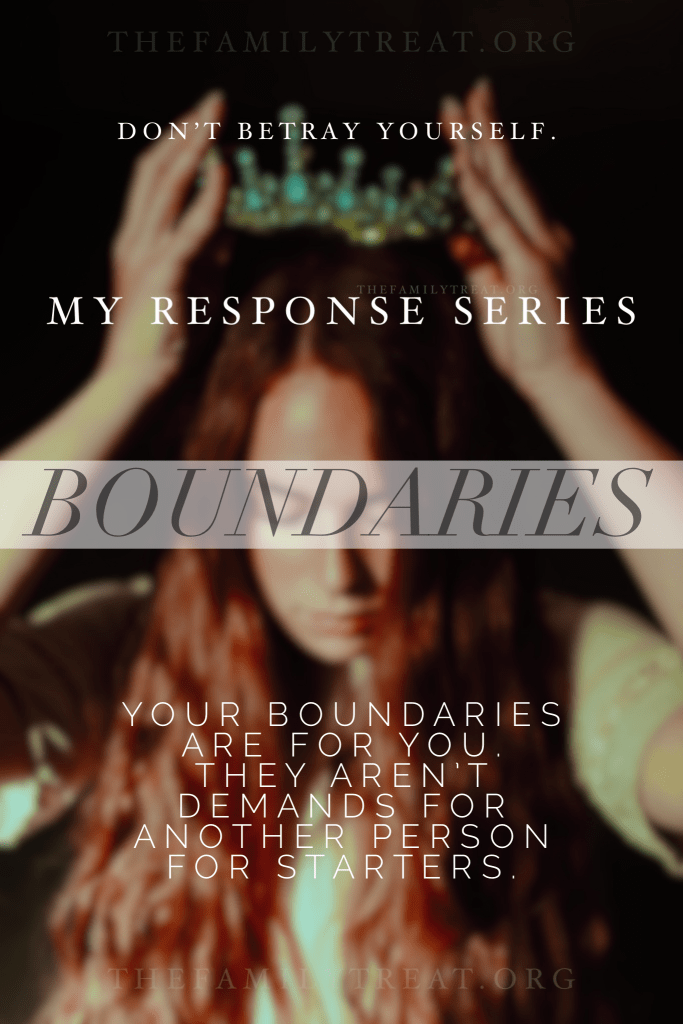
Your boundaries are for you. They aren’t demands for another person for starters.
Hannah Esther
This was something that took me so long to grasp. Boundaries are my edges of acceptance. Before my boundaries are crossed is where grace lives for communication errors, after my boundaries are crossed, is when I will do for myself what is necessary to honor my body, my life and my integrity to keep my own promises to myself.
In a nutshell, to enforce my boundaries is to not betray myself.
Hannah Esther
Before I can provide example boundaries. It’s first very important to understand what your boundaries even are, what’s important to you, what’s a non negotiable, what you want your relationship agreement to consist of and what direction you would want your relationship to grow into, what you deem as acceptable vs unacceptable behavior and define who you want to be, how you want to show up for yourself. Alignment with yourself is your very first relationship (aside from God), honoring yourself, being at peace with yourself and taking responsibility for your feelings and choices in life.
We are the designers of our life, that can be a depressing thought or it can also be the most empowering. When you grasp these truths for yourself and grow in your values and principles for your life and begin taking ownership for your choices and not blame others and their horrid behavior for why you do what you do, you will find that they are not your responsibility. You are.
That being said. Depending on your lifestyle choice and values and principles, let’s start with a universal healthy boundary.
- I am whole and will not disrespect myself. (Remember these boundaries are for you, not a demand on anyone else’s life, we are not going to force anyone to “obey” us)
enforce by – excusing yourself from those who disrespect you. (We do not ask people to respect us, who they are choosing to be is their choice, we observe and act accordingly. What you accept is what will continue and by design only get worse)
- I am not willing to compromise my morals and integrity for convenience.
enforce by – excusing yourself from alliances with someone who is baiting you to compromise your integrity and morals. Removing yourself from situations where you would have to betray yourself to “keep the peace”. Even if that means saying goodbye to someone I love dearly and it breaks my heart to know they would rather choose to harm me than honor me, so I must respectfully honor myself and say goodbye or nothing at all and go.
I know not everyone is able to to leave their situations right when they realize they’ve been lied to for years and their bamboozled reality is so crushing and harrowing that they are barely able to fathom what’s even happening, however practicing and implementing honoring yourself starts today, and it’s never too late to begin.
Nutshell, she would have to first find where she begins and where she ends. Something that often happens in these situations that are harrowing, is enmeshment. We become so invested in fixing that we forget, we are not them and we have a responsibility to ourselves to remembering that they are making choices for their life. And when someone does that, it’s not a sign to jump in and begin living their life for them, it’s a sign that they have different desires for the trajectory of their life and its up to you to choose if you want to align with their trajectory or excuse yourself from the path they are choosing to live actively in.
Much love on your journey! ♥️🫂
Language for Behavior
Let’s talk about the power of language in building strong boundaries and gaining clarity!
- Manipulative Behavior: When someone consistently tries to control or influence your decisions and emotions for their benefit, without considering your feelings or needs.
- Gaslighting: When someone distorts or denies reality to make you doubt your own perceptions, memories, and sanity.
- Passive-Aggressive Behavior: Expressing negative feelings indirectly, often through sarcasm, silent treatment, or subtle actions.
- Isolation: Deliberately cutting you off from friends, family, or other sources of support to gain control over you.
- Undermining: Consistently diminishing your achievements, opinions, or capabilities to erode your self-esteem.
- Neglect: Failing to provide emotional, physical, or psychological care and support, leading to feelings of abandonment.
- Bullying: Engaging in repetitive aggressive behavior to assert power and dominance over you, causing emotional distress.
- Intimidation: Using threats, verbal abuse, or body language to make you feel frightened and submissive.
- Exploitation: Taking advantage of your vulnerabilities or resources for personal gain, often without regard for your well-being.
- Control: Exerting excessive influence over your actions, decisions, or freedom, limiting your autonomy.
- Invalidation: Dismissing or belittling your feelings, thoughts, or experiences, causing self-doubt and confusion.
Using these specific terms can help individuals accurately communicate their experiences and feelings, which is a crucial step in gaining clarity and seeking the necessary support or resolution.
- Verbal Aggression: Engaging in hostile language, insults, or yelling that causes emotional harm and distress.
- Withholding Information: Intentionally keeping important information from you to maintain control or manipulate your decisions.
- Stonewalling: Refusing to communicate or engage in conversations, which can lead to frustration and a lack of resolution.
- Guilt-Tripping: Using guilt or manipulation to make you feel responsible for someone else’s feelings or actions.
- Conditional Love: Expressing affection only when certain conditions are met, creating insecurity and dependence.
- Silent Treatment: Ignoring you or refusing to communicate as a form of punishment or control.
- Minimization: Downplaying the seriousness of a situation or your feelings, making it difficult to validate your experiences.
- Boundary Violation: Ignoring or crossing your personal boundaries, leading to discomfort and a sense of violation.
- Projection: Assigning your own negative feelings or traits onto someone else to avoid acknowledging them in yourself.
Defining these behaviors can help individuals recognize and articulate their experiences more clearly.
- Deflection: Shifting the focus of a conversation away from the topic at hand, often to avoid taking responsibility for one’s actions.
- Selective Memory: Choosing to remember or forget certain details in a way that serves one’s narrative or intentions.
- Escalation: Intentionally intensifying conflicts or disagreements to manipulate the situation or gain control.
- False Promises: Making commitments with no intention of following through, leading to disappointment and mistrust.
- Blame-Shifting: Holding you responsible for problems or issues that are actually caused by the other person’s actions.
- Discrediting: Undermining your credibility or reputation to prevent others from taking your perspective seriously.
- Double Standards: Applying different sets of rules or expectations to different people, causing feelings of inequality and injustice.
- Love-Bombing: Overwhelming you with excessive attention, compliments, or gifts initially, only to later use these gestures for manipulation.
- Microaggressions: Subtle and often unintentional actions or comments that convey prejudice or discrimination.
- Emotional Blackmail: Threatening to withdraw love, support, or care to control your behavior or decisions.
Using these terms to describe behaviors can help individuals pinpoint specific actions that may be contributing to their lack of clarity. This awareness can empower them to assess their situation objectively, communicate effectively, and make informed decisions about seeking help, setting boundaries, or taking steps towards personal growth and resolution.
- Triangulation: Involving a third party in conflicts or discussions to manipulate perceptions or gain an advantage.
- Cycle of Abuse: Recognizing the repeating pattern of tension-building, explosion, reconciliation, and honeymoon phases in an abusive relationship.
- Victim-Blaming: Holding you responsible for the negative consequences of the other person’s behavior, shifting the blame onto you.
- Coercion: Using pressure, threats, or manipulation to force you into actions or decisions you’re uncomfortable with.
- Invalidation: Dismissing or belittling your emotions, experiences, or perspective, leading to self-doubt and confusion.
- Negotiation Tactics: Utilizing manipulation or emotional tactics during discussions to sway the outcome in one’s favor.
- Passive Compliance: Going along with requests or demands to avoid conflict or negative repercussions, even if you’re uncomfortable.
- Scapegoating: Blaming you for problems or difficulties within a group or relationship, often unfairly.
- Hostile Humor: Using sarcasm or humor to demean or ridicule you, under the guise of joking.
- Controlled Disclosure: Sharing selective information to maintain power, withholding key details to manipulate the situation.
This understanding is essential for making informed decisions about seeking help, setting boundaries, and ultimately prioritizing their well-being.
- Mental Manipulation: Using psychological tactics to influence your thoughts, beliefs, and perceptions.
- Exploitative Promises: Offering rewards, benefits, or positive outcomes to manipulate your behavior or compliance.
- Disengagement: Avoiding communication or emotional connection as a way to control the relationship or situation.
- Normalization of Harm: Downplaying or justifying harmful behavior to make it seem acceptable or typical.
- Selective Amnesia: Conveniently forgetting previous promises, commitments, or agreements.
- Emotional Withholding: Refusing to provide emotional support, affection, or validation as a means of control.
- Intentional Confusion: Deliberately creating unclear or contradictory situations to keep you off-balance.
- Conditional Approval: Granting approval, affection, or attention only when certain conditions are met.
- Dismissive Attitude: Ignoring your concerns, opinions, or emotions, causing you to feel insignificant.
- Overstepping Boundaries: Ignoring your personal limits or disregarding your consent, leading to discomfort and violation.
I pray these behavioral identifiers will provide clarity to you and empower you to address issues, set healthy boundaries, and make choices that prioritize your mental, emotional, and physical well-being.
Thank you for reading! I do hope this was insightful and encouraging! This is such a profound topic. No matter where you are at on your journey, God loves you and is with you right where you are! God is the author of boundaries and I encourage you to get to know Him and His heart. God has given us the tools we need to embrace Him and live a life of abundance in Jesus Christ. You will find as you seek Him, and he is your first focus, your boundaries for what and who you allow into your life will increase with quality. I hope this finds you well. Live in the confidence that is your true identity! You are enough! ♥️
Add my Facebook page for updates and subscribe! – Facebook
Resources
More Resources
- Natalie Anne Hoffman with the Flying Free podcast — episode 160 “An Emotional Recovery Tool That Changes Everything” — this episode is a game changer. I listen to it often and it has changed how I think and process my thoughts. Defines where our actions begin. How no one can make us feel anything. It’s all based on the meaning we place on things. It’s powerful to take your power back that you didn’t even know was yours to begin with. It was yours all along!
- Leslie Vernick – Enriching Relationships That Matter Most — podcast episode “Is It Abuse?”
- PlusONE Parents — podcast episode “Does God Hate Divorce”
- Jen Wilkin — podcast episode “DISTRESS & DELIVERANCE: UNDERSTANDING THE HEART OF GOD IN THE MIDST OF SUFFERING WITH JEN WILKIN”
- Bare Marriage with Sheila Wray Gregoire
- Patrick Weaver Ministries
- Esther Company
- Confusion to Clarity
- The Life-Saving Divorce—Gretchen Baskerville
- Intentional Today
- Sarah McDugal – Wilderness to WILD
- Rebecca Davis—Untwisting Scriptures
- Betrayal Trauma Recovery
- Sarah K Ramsey Toxic Person Proof Podcast
- Marg Mowczko
- Psalm 82 Initiative
- Thriving Forward
- Held & Healed: Christian Women Rebuilding After Abuse by Heather Elizabeth
- Another One Free
- Amy Gannett — podcast episode “ANSWERING YOUR KIDS’ QUESTIONS ABOUT GOD WHEN YOU’VE GOT SOME OF YOUR OWN WITH AMY GANNETT”
- Lisa Appelo — podcast episode “LIFE CAN BE GOOD AGAIN: LOSS & LACK TRANSFORMED BY THE GOODNESS OF GOD WITH LISA APPELO”
- Bailey T. Hurley — podcast episode “FRIENDS LIKE FAMILY: FINDING YOUR PEOPLE & CULTIVATING COMMUNITY”
- Nate Postlethwait
- My Response Series | We Are All Here
 Remind yourself of who you are, you are your own mom. You get to love yourself through this, that sweet girl. That girl from 5 years ago, 10 years ago. The one you are protecting. The one from 20 years ago. We are all here. You are every version of yourself right now past present and future. And they love you and want you to know you are worth fighting for!!
 - My Response Series | “Why Didn’t You Protect Me From Yourself?”
 I can love my parents for who they are as human beings and Gods creation, while also recognizing the need to protect myself from their toxic behaviors by no longer allowing them access to me. Loving my parents and choosing to distance myself from them are not mutually exclusive. I’m honoring myself and them by protecting myself, with the form of love that I needed in childhood, by reparenting myself, this balance allows me to move forward with a sense of integrity and self-respect, fostering a healthier and more fulfilling life.
 - My Response Series | Love Bombing
 The “abuse” comes from the pattern: extreme positive stimulation followed by withdrawal, neglect, or return to baseline, leaving the target emotionally unbalanced. Even if the follow-up isn’t overtly hostile, the mismatch between the initial intensity and the later normalcy can create confusion, anxiety, and a sense of emotional debt.. making it inherently manipulative
 - My Response Series | You Can’t Do It For Him
 Boundaries protect your peace. Let us teach ourselves and our children that real love shows up with consistency, not convenience.


 The Family Treat