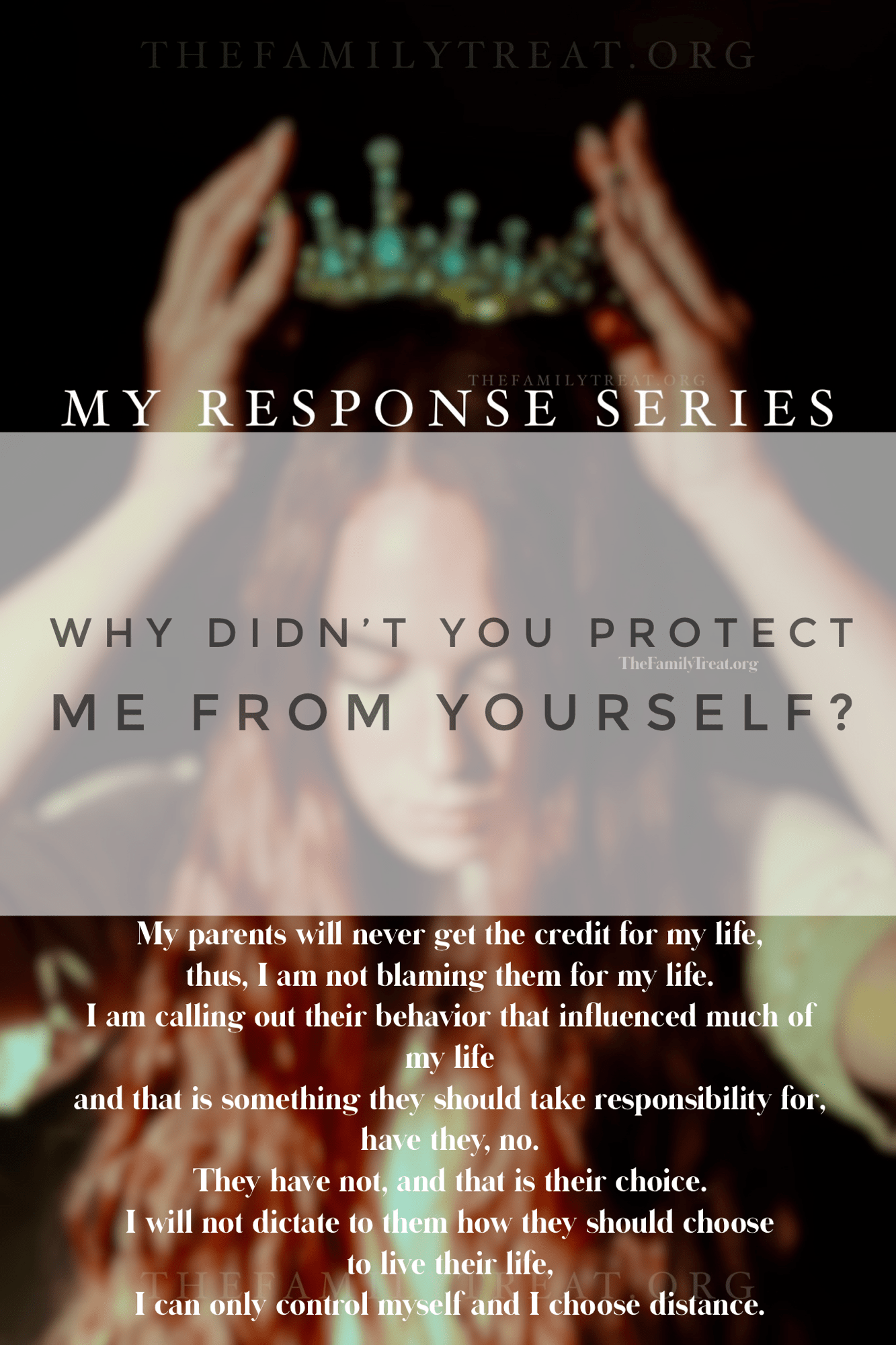

Hey! My name is Hannah! I have begun a series where I provide you with responses I give in some of the fb groups I am in. As they are private groups, I don’t share what the original post says verbatim, but the general topic of discussion, I do share that for context. I’m excited to share this response with you. The topic of discussion is “Why Didn’t You Protect Me From Yourself?”. I hope this is an encouragement to you who may be going through this type of confusion and need clarity, as well as insight to those who are trying to support their friend. I would like to encourage you to consider joining fb groups to support you and find a sisterhood of likeminded women! I have a list of resources at the bottom of this page! Tap here to skip to it!! I’ve also added another permanent section called Language for Behavior at the bottom before the list of resources!
Check out my post on Gaslighting
Check out my post to help women in a confusing relationship
Add my Facebook page for updates and subscribe! – Facebook
Original Post
This video is what inspired my post, because she elaborates on something I have felt for many many years but could never articulate into words. Only recently within the past two years have I been able to even accept that my mom was doing the things she did, that harmed me, intentionally. This is a rollercoaster I never asked for and gladly have hopped off the loop. I was able to escape and I am thankful for that. There’s so much I could say, I could write a book. Here’s a small burst of what this video inspired from me. My Facebook post.
My Response
Edited from the original post on fb
03/05/2026 – I originally wrote this June of 2024 and never published it here on my blog. I love who I chose to be in this season of my life and am proud to share in this experience of healing and navigating impossible situations.
This is so powerful. The grief I’ve felt for many years without language to identify what was happening other than feeling like something is off all the time, but also having the cognitive dissonance that this was normal and “every family has its struggles”. Being my parents emotional porta potty. Where they’d dump all of their hate for each other “I can’t wait to leave him when you and your sister move out” she’d say… “I never should have married her” he’d say… while then when they are mad at me… “you’re just like your dad” she’d say…. “Don’t act like your dad” she’d say… “if I’d known how she was I would never have married her” he’d say…. “She and her mom would fight so bad” he’d say…. “you and your mom are just like her and her mom” he’d say… the way they’d hate each other and then label me like them when they are angry was enough to make me never take “you’re like your —-pick a parent—-“ as a compliment, it was insulting and deregulating and destructive to ever say I was like either one of them, they’d conditioned me to never see being like them as a compliment or something to aspire to…. But rather to loathe and feel worthless if I was to be identified like them at all…
They’d feign wisdom by sharing in their past “mistakes” yet to “help us”… yet while they shared their “shame” for past mistakes… they’d grossly indulge in elaborating in great detail all of those mistakes like they were proud of them, projecting into me their shame and guilt instead of taking ownership of their present mistakes… they’d say I was just seeking attention when I’d voice what I’d witnessed. They were so proud of the Christian testimony that they’d do anything, destroy anyone and even go so far as to hurt their own children in order to sustain the fisod that was their lives. They were one and the same. Hating each other and hating their own self. Treating one another like they were the cause for each other’s problems and then feigning innocence when they needed to use one another. Acting like this was a relationship. Using and abusing one another in a circle that could only harm in great detail those around them.
No one was safe.
Yet even my own siblings didn’t experience what I’d experienced. I was alone. I was alone with their shame and their guilt and their hatred. They bore all of it into me and I had to find a way to deal or else I would be alone and I wanted so badly for a family.
For the feeling of belonging.
What child doesn’t want that in some form. I was abandoned far before I could understand what that even meant. All I’ve ever known is being abandoned. I abandoned myself, because I didn’t know that what they’d done to me was not only abusive and unnatural, it was a slow poison. It seeped into every part of me, warping my sense of self and worth. I grew up believing I was unworthy of love, that I was somehow to blame.
But now, I see the truth. Their actions were a reflection of their flaws, not mine. I’m starting to piece myself back together, to nurture the parts of me that were neglected. It’s a painful process, but it’s also a path to healing. I deserve love, I deserve kindness, and I am learning to give those to myself. I am not what happened to me; I am who I choose to become.
There I was 8-9 years old learning that my dad was a pervert, told my mom. Nothing happened.
At 12 finding his online dating account.
Told my mom, only to find out she was the biggest enabler. She didn’t protect me, she joined him.
I questioned myself, what I saw and felt.
He and I developed a close relationship.
When I gave birth she couldn’t stand to see me happy, the pattern reveals.
She comes and “confides” in me about the depravity of my dad, the depth of his doing, prior to my witness, and how all these years they’d called me a liar and an attention seeker, I was actually telling the truth. How my whole childhood was me being silenced, because I saw things that would destroy their glass house. So they destroyed me instead. Crushed me, and now she was using that information to crush me even further as a new mom and in doing so… I unraveled. Who wouldn’t.
Something snapped in me. She says “what are you going to do now that you know, you can’t report it because they’ll take away your daughter, since you’ve allowed her to be babysat by me with him in the house”… she said that to a new first time mom, who previously stopped talking to her for a year. And seldom prior to that. She broke me. Year after year. She didn’t care how this would impact me. She seemed to want me broken. Moldable. Easier to manipulate. And yes, I blew up my life again… like I tended to do after she entered my life with bold nervous system shocking behaviors. She was a force, and if you’re not aware of her reckoning, she will wreck you and walk away unscathed while you sit in the aftermath, aftershock, drooling on yourself unsure what just happened…. Obliterated and confused. A shell. Your brain stuffs it down though, for you to survive.
As she talks about you like you’re the problem, like here 12 years later you’re all the sudden going no contact. Like all the sudden I’ve stopped speaking with her because I’m selfish or insecure or trying to punish her. Good grief. If only. If only I could have been selfish, if only I could muster the thought of punishment. But no. The story didn’t end there. She wasn’t done.
She reveled in the demise of my life, as she gained control of my daughter when I became a helpless single mom for the first time. She gained the ability to claim “I raised her” and my sister too, they were two happy clams claiming to raise my daughter. When this just simply was not true. (They seemed to enjoyed getting a reaction out of me, they liked to make me feel jealous so I would just sabotage myself and leave.) While I worked full time and all the while, you’d have to of been blind or enjoyed the favoritism, because anytime I would seek refuge from my mom like you’d think you could, she’d be very obvious in “clicking” up with my sister.. to the point… I was actually left getting silently rejected over and over and over. There’s no doubt in my mind now that it was all intentional based on the pattern. This isn’t just one or 10 times, this was over the course of multiple decades.
I’d spent years in my childhood “protecting” her from my dad’s rage to getting spit in the face by him and him breaking my finger, to her intentionally rejecting me in my youth and young adulthood.
Why did you hate me so, then feign I all the sudden stopped talking to you. Why do you seek pity from people who don’t know you and mischaracterize me to people who don’t know me?
You treat people so differently, no one has experienced what you’ve done to me and if they have, you’re the best puppet master, it’d likely take them 30 years to unravel what’s happening to them too. You pit people against each other. You play the martyr and the hero simultaneously. The victim only when you’re the abuser. You’re the first to avoid accountability and pass blame. You offer all the help in the world publicly, while completely ignoring you’d ever offered anything of the kind, and if brought up, you’d treat it like I was asking a favor with the stringssss of a lifetime attached, body, soul and spirit… a life time of guilt and shame.
Those strings. What do you want.
She finds sneaky ways to contact my daughter. How do I protect my daughter from my mom’s hold.
I teach her how to say no.
I teach her to trust her gut.
I teach her to feel her feelings.
I listen to her.
I let her know she’s safe here.
I give her freedom to express herself.
I tell her to only do what she wants and to never do what she doesn’t want to do. Saying no is okay!
I give you permission to say no to anyone including me.
You do not have to do anything you do not want to do, if someone gets mad at you for saying no, they are unsafe and to leave them immediately.
Do not indulge someone if they show you they are unsafe.
If they are testing your boundaries then apologizing when you have pointed it out, as a pattern, they are unsafe! Get comfortable with loving and letting go.
Having discernment on who will remain in your life will alleviate a lot of pain a stress from your life. You do not need to live a life of suffering to be considered worth something. You do not need to live a life seeking others approval, what do you think, role with that.
It’s not picky, it’s preference and those who are preferential with their time and energy are thriving instead of commiserating in their woes! I do not commiserate, I educate and relate.
Most of my life’s lessons were born from neglect from my family of origin combined with falling directly into the arms of unhealthy men has captured the essence of the direct correlation to emotional neglect in the formative years and a adult not having healthy relationships in their long term choice.
I felt the longing for belonging, togetherness, family since I was a child. I was always met with the type of man who shared qualities with my mom though. It is so painful, and I will never glorify my pain as somehow being a blessing.
I am still harmed by this reality and I’ve only become aware of it all really within the past 2 years and I’m grieving so hard.
Here’s to healing!
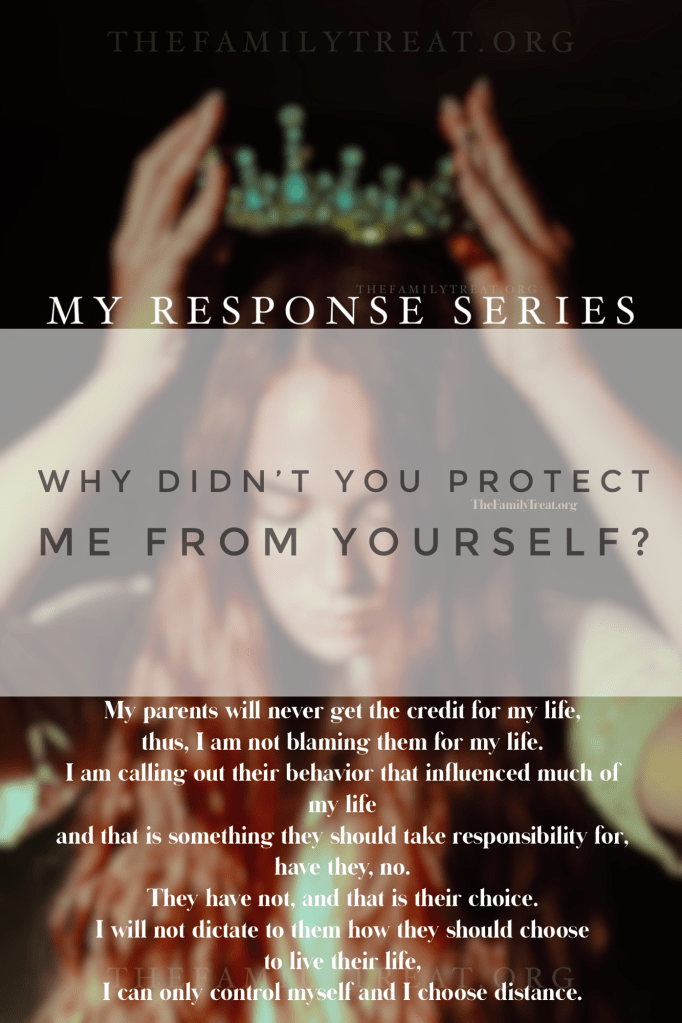
This is for those who say “stop blaming your parents for your life”. I will never blame or give credit to my parents for my life. I will only ever give credit and the glory to God for my life. My successes, victories, spiritual healing, emotional healing, my life is my own and God gave it to me. My parents will never get the credit for my life, thus, I am not blaming them for my life. I am calling out their behavior that influenced much of my life and that is something they should take responsibility for, have they, no. They have not, and that is their choice. I will not dictate to them how they should choose to live their life, I can only control myself and I choose distance. Physically distancing myself from them has been the best and one of the hardest decisions of my life.
A Break Down Of Acceptance
Acceptance has been a transformative process for me, one that involves recognizing and coming to terms with the painful truths about my past. I had to acknowledge the deeply ingrained patterns of emotional abuse and neglect inflicted by my parents. These experiences warped my sense of self-worth and led me to internalize feelings of shame and guilt. However, through this painful journey of acceptance, I have begun to disentangle my identity from the toxic behaviors of my parents. Acceptance for me is not about excusing or overlooking the harm done, but about reclaiming my own narrative and understanding that my parents’ actions were a reflection of their own flaws, not mine. By accepting this reality, I am slowly learning to nurture myself, affirm my worth, and set healthy boundaries. This marks a critical step towards my healing and self-empowerment.
How Grief Impacts You
Grieving has had a profound impact on me, marking a journey through various stages that reflect the depth of my pain and the complexity of healing. Initially, I grappled with denial and cognitive dissonance, trying to normalize the constant feeling that something was off in my family dynamics. As I progressed, anger and resentment surfaced, especially as I became aware of how my parents used me as an emotional dumping ground, labeling me negatively in their conflicts. Bargaining followed, where I hoped for a semblance of familial love and belonging that never truly existed. Depression set in as the weight of their abusive behaviors and my own internalized shame became overwhelming. Acceptance, the most transformative stage, has allowed me to see their actions as reflections of their own flaws rather than my worth. I am learning to reclaim my identity, set healthy boundaries, and nurture myself, ultimately paving the way for healing.
How Neglect Impacts You
Neglect has had a profound impact on me, shaping my sense of self-worth and my relationships. Growing up in an environment where my emotional needs were consistently ignored, I internalized the belief that I was unworthy of love and attention. This neglect was a slow poison, seeping into every part of me and warping my sense of self. It left me feeling abandoned and alone, even within my own family. The lack of nurturing and validation from my parents led me to question my own perceptions and feelings, leaving me vulnerable to further emotional abuse. This deep-seated neglect influenced my choices in relationships, often drawing me to people who mirrored my parents’ behaviors. The process of recognizing this neglect and its effects has been painful, but it has also been crucial for my healing. I am learning to validate my own feelings, set boundaries, and seek out healthier relationships. By addressing the impact of neglect, I am slowly rebuilding my sense of self-worth and learning to give myself the love and attention I was denied.
How Parentification Impacts You
Parentification has deeply impacted my life, forcing me into roles and responsibilities far beyond my years. As a child, I was expected to manage my parents’ emotional needs, becoming their confidant and mediator in their conflicts. This dynamic made me feel like an emotional porta potty, where they would dump all their frustrations and hatred for each other onto me. The weight of their expectations and the constant exposure to their toxic relationship robbed me of a normal childhood and left me feeling overwhelmed and burdened. This early role reversal instilled a sense of responsibility for their happiness and stability, which carried into my adult relationships. I found myself continually trying to fix and support others at the expense of my own needs. The impact of parentification has been profound, leading to chronic stress, and a distorted sense of self-worth. However, recognizing this pattern has been a step toward healing. I am learning to set boundaries, prioritize my own emotional well-being, and release the undue burden of responsibility for others’ happiness. Through this process, I am reclaiming my right to a life where I can nurture myself and build healthier, more balanced relationships.
The Consequence
The consequences of my upbringing, marked by neglect, emotional abuse, and parentification, have profoundly shaped my life and sense of self. These experiences ingrained in me a deep-seated belief that I was unworthy of love and attention, warping my self-worth and leaving me with a pervasive sense of shame and guilt, coined by God being like my parents and anything bad happening in my life was simply Gods punishment for my own sins. Instead of “hey you’re in an unhealthy situation and should leave.”
The constant emotional turmoil made me feel abandoned and alone, even within my own family. This affected my ability to form healthy relationships, as I often found myself drawn to individuals who mirrored my parents’ toxic behaviors, perpetuating a cycle of emotional neglect and abuse. The burden of parentification, where I was forced to manage my parents’ emotional needs, led to chronic stress, as I constantly prioritized others’ well-being over my own. This early role reversal left me feeling overwhelmed and responsible for fixing and supporting others. However, acknowledging these consequences has been crucial for my healing. By recognizing these patterns, I am learning to validate my own feelings, set healthy boundaries, and reclaim my identity.
The Power Of And
Contrary to cognitive dissonance — The power of “and” lies in its ability to hold seemingly contradictory truths simultaneously, allowing for a more nuanced and holistic understanding of complex emotions and relationships. In my case, it means acknowledging that I can love my parents for who they are as human beings and Gods creation, while also recognizing the need to protect myself from their toxic behaviors by no longer allowing them access to me.
This approach allows me to honor my feelings of love without negating the harmful impact their actions have had on me. By embracing the power of “and,” I can:
- Acknowledge the Complexity: I can accept that I have love for them as my parents, even if they never provided care love or support, and also recognize the necessity of distancing myself for my own well-being.
- Set Healthy Boundaries: I can love them from a distance, understanding that maintaining these boundaries is essential for my mental and emotional health.
- Accept My Complex Emotions: I can accept that my feelings towards my parents are multifaceted, encompassing both love and hurt, without feeling guilty or conflicted.
- Empower Myself: By using “and,” I empower myself to take control of my own life, making choices that prioritize my mental and emotional health.
Loving my parents and choosing to distance myself from them are not mutually exclusive. I’m honoring myself and them by protecting myself, with the form of love that I needed in childhood, by reparenting myself, this balance allows me to move forward with a sense of integrity and self-respect, fostering a healthier and more fulfilling life.
A Break Down of Moving Forward
Moving forward for you involves several key steps:
- Self-Awareness: Acknowledge and accept your past experiences and their impact on your life.
- Setting Boundaries: Establish clear boundaries with toxic influences, including family members, to protect your mental and emotional well-being.
- Self-Care: Prioritize your own needs and practice self-care regularly to nurture your physical, emotional, and mental health.
- Seeking Support: Surround yourself with supportive and understanding individuals who uplift and validate your experiences.
- Healing: Engage in healing practices such as therapy, journaling, or mindfulness to process your emotions and work through past trauma.
- Personal Growth: Focus on personal development and positive growth opportunities that align with your values and aspirations.
- Forgiveness and Acceptance: Work towards forgiving yourself, and embrace acceptance of what you cannot change while empowering yourself to shape your future.
By taking these steps, you can navigate towards a more fulfilling and empowered life, free from the constraints of your past experiences.
Language for Behavior
Let’s talk about the power of language in building strong boundaries and gaining clarity!
- Manipulative Behavior: When someone consistently tries to control or influence your decisions and emotions for their benefit, without considering your feelings or needs.
- Cognitive Dissonance: is the uncomfortable feeling we get when we hold conflicting beliefs or attitudes, or when our actions contradict our beliefs. It causes mental tension as we try to reconcile these contradictions, often leading to changes in beliefs or behaviors to reduce the discomfort.
- Gaslighting: When someone distorts or denies reality to make you doubt your own perceptions, memories, and sanity.
- Passive-Aggressive Behavior: Expressing negative feelings indirectly, often through sarcasm, silent treatment, or subtle actions.
- Isolation: Deliberately cutting you off from friends, family, or other sources of support to gain control over you.
- Undermining: Consistently diminishing your achievements, opinions, or capabilities to erode your self-esteem.
- Neglect: Failing to provide emotional, physical, or psychological care and support, leading to feelings of abandonment.
- Bullying: Engaging in repetitive aggressive behavior to assert power and dominance over you, causing emotional distress.
- Intimidation: Using threats, verbal abuse, or body language to make you feel frightened and submissive.
- Exploitation: Taking advantage of your vulnerabilities or resources for personal gain, often without regard for your well-being.
- Control: Exerting excessive influence over your actions, decisions, or freedom, limiting your autonomy.
- Invalidation: Dismissing or belittling your feelings, thoughts, or experiences, causing self-doubt and confusion.
Using these specific terms can help individuals accurately communicate their experiences and feelings, which is a crucial step in gaining clarity and seeking the necessary support or resolution.
- Verbal Aggression: Engaging in hostile language, insults, or yelling that causes emotional harm and distress.
- Withholding Information: Intentionally keeping important information from you to maintain control or manipulate your decisions.
- Stonewalling: Refusing to communicate or engage in conversations, which can lead to frustration and a lack of resolution.
- Guilt-Tripping: Using guilt or manipulation to make you feel responsible for someone else’s feelings or actions.
- Conditional Love: Expressing affection only when certain conditions are met, creating insecurity and dependence.
- Silent Treatment: Ignoring you or refusing to communicate as a form of punishment or control.
- Minimization: Downplaying the seriousness of a situation or your feelings, making it difficult to validate your experiences.
- Boundary Violation: Ignoring or crossing your personal boundaries, leading to discomfort and a sense of violation.
- Projection: Assigning your own negative feelings or traits onto someone else to avoid acknowledging them in yourself.
Defining these behaviors can help individuals recognize and articulate their experiences more clearly.
- Deflection: Shifting the focus of a conversation away from the topic at hand, often to avoid taking responsibility for one’s actions.
- Selective Memory: Choosing to remember or forget certain details in a way that serves one’s narrative or intentions.
- Escalation: Intentionally intensifying conflicts or disagreements to manipulate the situation or gain control.
- False Promises: Making commitments with no intention of following through, leading to disappointment and mistrust.
- Blame-Shifting: Holding you responsible for problems or issues that are actually caused by the other person’s actions.
- Discrediting: Undermining your credibility or reputation to prevent others from taking your perspective seriously.
- Double Standards: Applying different sets of rules or expectations to different people, causing feelings of inequality and injustice.
- Love-Bombing: Overwhelming you with excessive attention, compliments, or gifts initially, only to later use these gestures for manipulation.
- Microaggressions: Subtle and often unintentional actions or comments that convey prejudice or discrimination.
- Emotional Blackmail: Threatening to withdraw love, support, or care to control your behavior or decisions.
Using these terms to describe behaviors can help individuals pinpoint specific actions that may be contributing to their lack of clarity. This awareness can empower them to assess their situation objectively, communicate effectively, and make informed decisions about seeking help, setting boundaries, or taking steps towards personal growth and resolution.
- Triangulation: Involving a third party in conflicts or discussions to manipulate perceptions or gain an advantage.
- Cycle of Abuse: Recognizing the repeating pattern of tension-building, explosion, reconciliation, and honeymoon phases in an abusive relationship.
- Victim-Blaming: Holding you responsible for the negative consequences of the other person’s behavior, shifting the blame onto you.
- Coercion: Using pressure, threats, or manipulation to force you into actions or decisions you’re uncomfortable with.
- Invalidation: Dismissing or belittling your emotions, experiences, or perspective, leading to self-doubt and confusion.
- Negotiation Tactics: Utilizing manipulation or emotional tactics during discussions to sway the outcome in one’s favor.
- Passive Compliance: Going along with requests or demands to avoid conflict or negative repercussions, even if you’re uncomfortable.
- Scapegoating: Blaming you for problems or difficulties within a group or relationship, often unfairly.
- Hostile Humor: Using sarcasm or humor to demean or ridicule you, under the guise of joking.
- Controlled Disclosure: Sharing selective information to maintain power, withholding key details to manipulate the situation.
This understanding is essential for making informed decisions about seeking help, setting boundaries, and ultimately prioritizing their well-being.
- Mental Manipulation: Using psychological tactics to influence your thoughts, beliefs, and perceptions.
- Exploitative Promises: Offering rewards, benefits, or positive outcomes to manipulate your behavior or compliance.
- Disengagement: Avoiding communication or emotional connection as a way to control the relationship or situation.
- Normalization of Harm: Downplaying or justifying harmful behavior to make it seem acceptable or typical.
- Selective Amnesia: Conveniently forgetting previous promises, commitments, or agreements.
- Emotional Withholding: Refusing to provide emotional support, affection, or validation as a means of control.
- Intentional Confusion: Deliberately creating unclear or contradictory situations to keep you off-balance.
- Conditional Approval: Granting approval, affection, or attention only when certain conditions are met.
- Dismissive Attitude: Ignoring your concerns, opinions, or emotions, causing you to feel insignificant.
- Overstepping Boundaries: Ignoring your personal limits or disregarding your consent, leading to discomfort and violation.
I pray these behavioral identifiers will provide clarity to you and empower you to address issues, set healthy boundaries, and make choices that prioritize your mental, emotional, and physical well-being.
Thank you for reading! I do hope this was insightful and encouraging! This is such a profound topic. No matter where you are at on your journey, God loves you and is with you right where you are! God is the author and finisher of our faith and I encourage you to get to know Him and His heart. God has given us the tools we need to embrace Him and live a life of abundance in Jesus Christ. You will find as you seek Him, and he is your first focus, your desire to learn truth will be revealed by Him. God gives us understanding in His timing. Understanding the truth of who you are in Christ, who He is to you and how He loves you. Meditating on the truth will free you of the burden of “keeping things together” and “looking the part”, “being a certain way” and “looking like a Christian”, versus having an actual intimate relationship with God. I want to encourage you to have grace with yourself, don’t dismiss your experiences simply because someone “has it worse”, your experiences and feelings are valid and real. Live in the confidence knowing that in Jesus Christ is where lies your true identity, not in other peoples opinions or definitions! You are enough and God loves and accepts ALL of you! ♥️
Add my Facebook page for updates and subscribe! – Facebook
Resources
More Resources
- Natalie Anne Hoffman with the Flying Free podcast — episode 160 “An Emotional Recovery Tool That Changes Everything” — this episode is a game changer. I listen to it often and it has changed how I think and process my thoughts. Defines where our actions begin. How no one can make us feel anything. It’s all based on the meaning we place on things. It’s powerful to take your power back that you didn’t even know was yours to begin with. It was yours all along!
- Leslie Vernick – Enriching Relationships That Matter Most — podcast episode “Is It Abuse?”
- PlusONE Parents — podcast episode “Does God Hate Divorce”
- Jen Wilkin — podcast episode “DISTRESS & DELIVERANCE: UNDERSTANDING THE HEART OF GOD IN THE MIDST OF SUFFERING WITH JEN WILKIN”
- Bare Marriage with Sheila Wray Gregoire
- Patrick Weaver Ministries
- Esther Company
- Confusion to Clarity
- The Life-Saving Divorce—Gretchen Baskerville
- Intentional Today
- Sarah McDugal – Wilderness to WILD
- Rebecca Davis—Untwisting Scriptures
- Betrayal Trauma Recovery
- Sarah K Ramsey Toxic Person Proof Podcast
- Marg Mowczko
- Psalm 82 Initiative
- Thriving Forward
- Held & Healed: Christian Women Rebuilding After Abuse by Heather Elizabeth
- Another One Free
- Amy Gannett — podcast episode “ANSWERING YOUR KIDS’ QUESTIONS ABOUT GOD WHEN YOU’VE GOT SOME OF YOUR OWN WITH AMY GANNETT”
- Lisa Appelo — podcast episode “LIFE CAN BE GOOD AGAIN: LOSS & LACK TRANSFORMED BY THE GOODNESS OF GOD WITH LISA APPELO”
- Bailey T. Hurley — podcast episode “FRIENDS LIKE FAMILY: FINDING YOUR PEOPLE & CULTIVATING COMMUNITY”
- Nate Postlethwait
- My Response Series | “Why Didn’t You Protect Me From Yourself?”
 I can love my parents for who they are as human beings and Gods creation, while also recognizing the need to protect myself from their toxic behaviors by no longer allowing them access to me. Loving my parents and choosing to distance myself from them are not mutually exclusive. I’m honoring myself and them by protecting myself, with the form of love that I needed in childhood, by reparenting myself, this balance allows me to move forward with a sense of integrity and self-respect, fostering a healthier and more fulfilling life.
 - My Response Series | Love Bombing
 The “abuse” comes from the pattern: extreme positive stimulation followed by withdrawal, neglect, or return to baseline, leaving the target emotionally unbalanced. Even if the follow-up isn’t overtly hostile, the mismatch between the initial intensity and the later normalcy can create confusion, anxiety, and a sense of emotional debt.. making it inherently manipulative
 - My Response Series | You Can’t Do It For Him
 Boundaries protect your peace. Let us teach ourselves and our children that real love shows up with consistency, not convenience.
 - My Response Series | When is Someone’s Temper Enough to Call it Quits?
 An insecure man will resent you for caring, resent you for understanding and resent you for not being equally or more insecure than him.


 The Family Treat