
🇺🇸 About Me
Hi, I’m Hannah — a proud American with a deep passion for history and the founding documents that shaped this beautiful nation. I created this space to make it easier for you to access, read, and download the Declaration of Independence, the Constitution of the United States, and the Bill of Rights — the cornerstone texts of our liberty and freedom.
These documents are more than just words on parchment. They are living reminders of the courage, sacrifice, and vision of the men and women who built and defended our republic. Understanding them is key to understanding our rights, our responsibilities, and our role in shaping the future of America.
I believe in knowing all of our nation’s history — not just the victories, but also the struggles. Facing the full truth of our past helps us grow, honors those who came before us, and empowers us to build a better future.
I hope this page gives you easy access to these founding texts, along with their original sources. Feel free to download them, read them, share them — and let them inspire you as they’ve inspired me.
God bless you, and God bless America. ♥️
— Hannah
“Freedom is rarely taken by force — it’s surrendered little by little, often through division. When a nation is turned against itself, people are persuaded to vote away the rights of others, not realizing they’re also giving up their own. Let’s choose unity over hate and honor all Americans as we exercise our right to vote in this beautiful nation.”
Hannah Esther
SOURCE
“Those who would give up essential liberty to purchase a little temporary safety deserve neither liberty nor safety.”
Benjamin Franklin
The Constitution of the United States of America
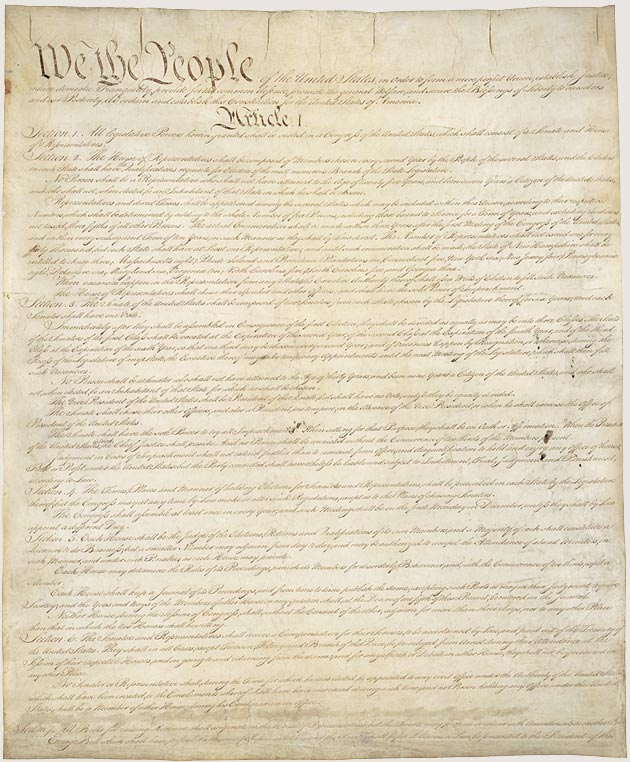
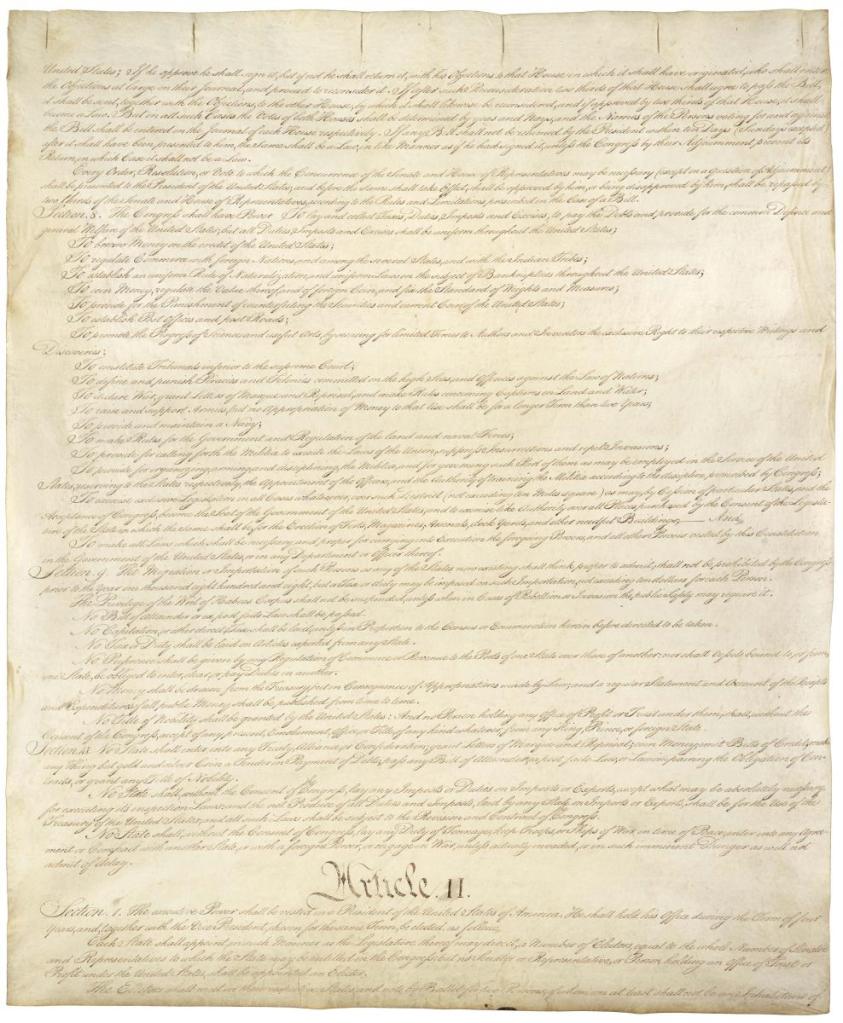

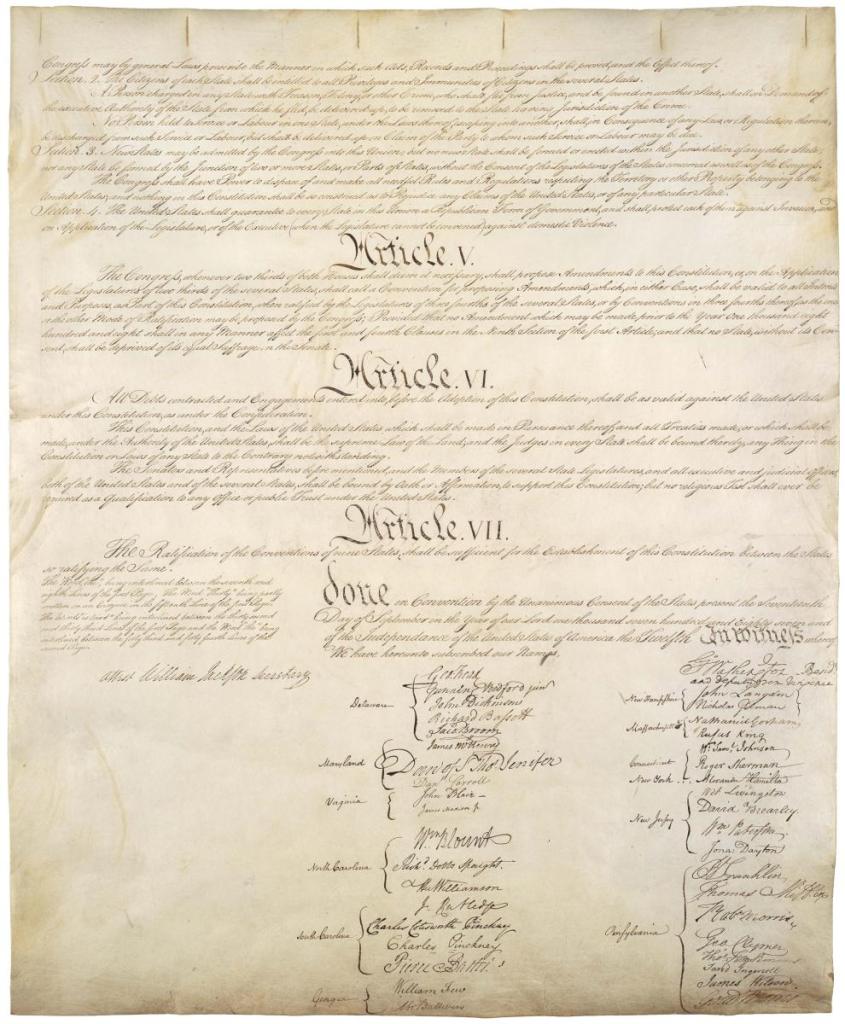
“A house divided against itself cannot stand.”
Abraham Lincoln

“Freedom is never more than one generation away from extinction.”
Ronald Reagan
The Declaration of Independence
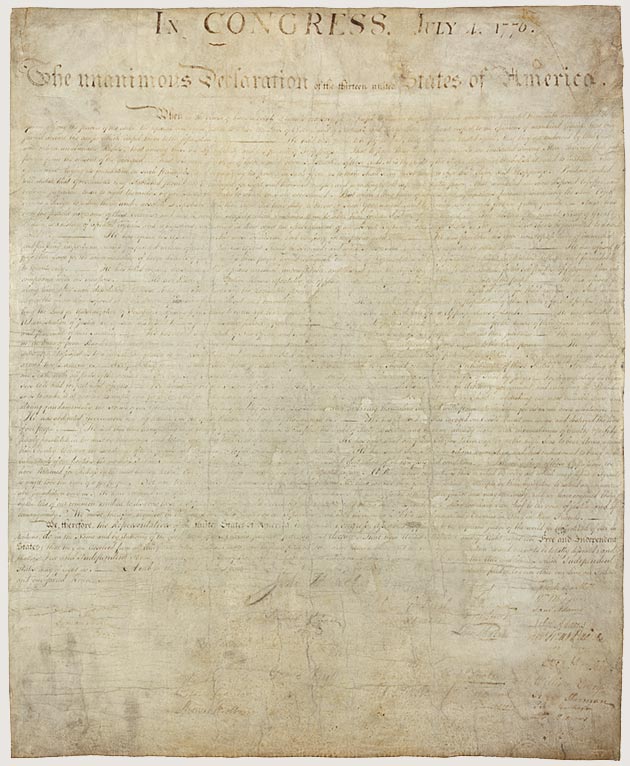
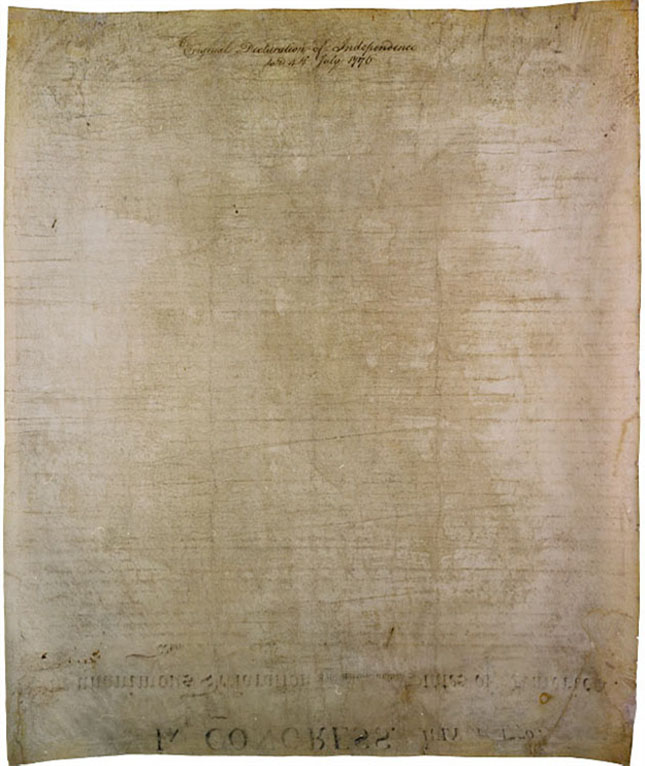

“Injustice anywhere is a threat to justice everywhere.”
Martin Luther King Jr.
Democracy Vs Constitutional Republic
The United States is not a pure democracy, but rather a constitutional republic — more specifically, a federal constitutional republic.
Here’s what that means:
Constitutional: The government is bound by a written Constitution that limits its powers and protects individual rights. Republic: no Citizens elect representatives to make laws and govern on their behalf, rather than voting on every issue directly (as in a direct or pure democracy). Federal: Power is divided between a national (federal) government and individual states.
Key distinction:
In a pure democracy, majority rule governs all decisions — meaning 51% can override the rights of the 49%.
In a constitutional republic, the rule of law and individual rights are protected even against majority opinion.
Quote that echoes this:
“Democracy is two wolves and a lamb voting on what to have for lunch. Liberty is a well-armed lamb contesting the vote.”
Often attributed to Benjamin Franklin (though not confirmed)
Why the Electoral College Is Important
The Electoral College is a foundational part of how the United States elects its president. It was created to ensure a balance between the will of the people and the rights of the states in a federal system. Here’s why it matters:
1. It protects smaller states.
Without the Electoral College, highly populated states like California, New York, or Texas could dominate every presidential election. The Electoral College ensures that less populated states still have a voice in choosing the president.
2. It encourages national unity.
Presidential candidates must campaign across a wide range of states and appeal to a diverse group of Americans—not just major cities or specific regions. This helps ensure that the president represents the whole country.
3. It balances democracy with federalism.
The United States is a constitutional republic, not a direct democracy. The Electoral College reflects that balance, giving power not just to individuals, but to the states as co-equal members of the union.
4. It helps prevent regional domination.
If elections were decided only by the popular vote, candidates could win by focusing only on a few large states or metro areas. The Electoral College forces them to consider the interests of rural communities and smaller states.
5. It reflects the founders’ intention.
The framers of the Constitution feared the dangers of majority rule without checks and balances. The Electoral College was part of their design to prevent any one group from holding too much power, protecting minority rights and encouraging deliberation.
In short, the Electoral College helps preserve the structure of our republic and ensures that all Americans — regardless of where they live — have a meaningful role in presidential elections.
Federalist Paper No. 68 — Alexander Hamilton
On the Electoral College:
“The process of election affords a moral certainty, that the office of President will never fall to the lot of any man who is not in an eminent degree endowed with the requisite qualifications.”
Context:
Hamilton argues that the Electoral College was designed to prevent unqualified or dangerous individuals from becoming president by placing the decision in the hands of knowledgeable electors chosen by the people.
“It was also particularly desirable to afford as little opportunity as possible to tumult and disorder… nothing was more to be desired than that every practicable obstacle should be opposed to cabal, intrigue, and corruption.”
Context:
Hamilton is explaining how the structure of the Electoral College limits chaos and manipulation. By preventing direct election and involving electors from each state, it reduces the risk of corruption or foreign influence.
Federalist Paper No. 39 — James Madison
On balancing state and national interests:
“The proposed Constitution, therefore, is, in strictness, neither a national nor a federal Constitution, but a composition of both.”
Context:
Madison highlights the federal nature of the Union. The Electoral College reflects this by ensuring that both the people and the states participate in presidential elections, maintaining the balance between local and national power.
Federalist Paper No. 10 — James Madison
On guarding against the tyranny of the majority:
“Democracies have ever been spectacles of turbulence and contention… and have in general been as short in their lives as they have been violent in their deaths.”
Context:
Madison warns of the dangers of pure democracy, where majority factions can overrun minority rights. The Electoral College is one of several mechanisms designed to prevent this, protecting the republic from mob rule.
Federalist Papers & the Electoral College: A Brief Synopsis
The Federalist Papers are a series of 85 essays written by Alexander Hamilton, James Madison, and John Jay to promote the ratification of the U.S. Constitution. In these writings, the Founding Fathers explain the reasoning behind the constitutional structure—including the creation of the Electoral College.
In Federalist No. 68, Alexander Hamilton describes the Electoral College as a safeguard against corruption, manipulation, and unqualified candidates. It was designed to ensure that the president would be chosen by electors who could deliberate wisely, rather than by direct popular vote, which could be swayed by chaos or emotion.
In Federalist No. 39, James Madison explains that the U.S. is not purely a national government, but a blend of national and federal systems. The Electoral College honors this balance by giving both the people and the states a role in selecting the president.
In Federalist No. 10, Madison also warns of the dangers of pure democracy and majority rule, where mob thinking could threaten liberty. The Electoral College is one of several constitutional protections against that danger, preserving stability and protecting minority rights.
Together, these essays show that the Electoral College was not a flaw, but a deliberate design to protect the republic, promote unity, and ensure thoughtful leadership.



 The Family Treat