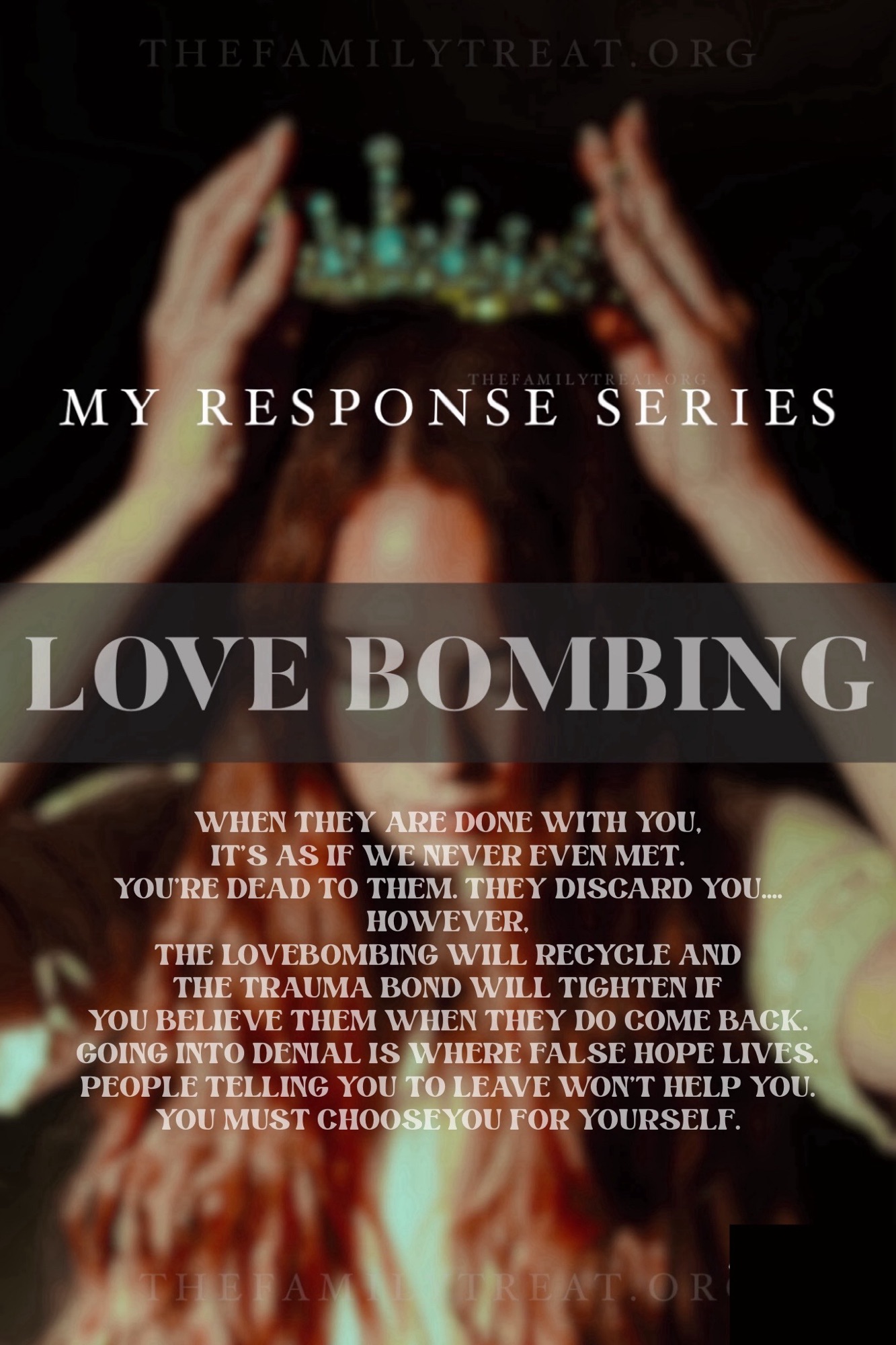

Hey! My name is Hannah! I have begun a series where I provide you with responses I give in some of the fb groups I am in. As they are private groups, I don’t share what the original post says verbatim, but the general topic of discussion, I do share that for context. I’m excited to share this response with you. The topic of discussion is “Love Bombing”. I hope this is an encouragement to you who may be going through this type of confusion and need clarity, as well as insight to those who are trying to support their friend. I would like to encourage you to consider joining fb groups to support you and find a sisterhood of like-minded women! I have a list of resources at the bottom of this page! Tap here to skip to it!! I’ve also added another permanent section called Language for Behavior at the bottom before the list of resources!
Check out my post on Gaslighting
Check out my post to help women in a confusing relationship
Add my Facebook page for updates and subscribe! – Facebook
Original Post
Paraphrased and shortened original post to maintain anonymity of original poster.
Wife posts a response from the husband that has multiple elements of self deprecation, undeserving of her giving a second chance, admission of mental health issue that makes his behavior out of his control, feigned apology, generalized acknowledgment of having done harmful behavior, claiming he’s given her no other choice but to not give him another chance.
More context: the wife is ready to separate due to his behavior over the 5 years of their marriage and now he sends this text message that almost feels like he’s showing humility and causing her to second guess her choice to end the marriage.
My response will show quotes from the husbands original message to the wife, however to protect those involved, there will be nothing that could link this back to them or the original post this came from.
My Response
This is the version of love bombing that causes you to feel hope… it doesn’t look like what we think love bombing is, but anything that is making you second guess what you know to be true or gives you the feeling you shouldn’t go and hooks you back in. Is the definition of your love bomb…. Specifically designed for you.
He’s using what he thinks will work to reel you back in, to hook you back in… girl, I have second guessed myself so many times and I would likely have ran right back if people kept telling me to leave him.. you will have to choose what is best for you.
However, I would strongly advise to push a little. Find the weak point in the message and drive it home, basically don’t take what he’s saying at face value. Take it as an onion and the top layer doesn’t make you cry because well it’s hiding all the bits beneath.
Once you begin to dig a little and cut into the layers of the onion, that’s when the water works begin, the truth begins to spill out.
How I see it, he’s just giving you lip service. It’s easy to parrot back “I do understand the the impact things have had on the kids and you. I take responsibility for all the drama and hurt I’ve caused.” ..which holds no weight, because nothing was actually taken accountability for, just generalization and no real specification. Even admits he’s ashamed, but then justifies it with “Some thing just switches in my mind.” ..as if to say it’s really out of his control and you shouldn’t actually try to hold him accountable… because “mental issue”……
You know where people go if their mental issue is causing harm to others, yeah that’s not an excuse, that’s a warning that this will continue and now he’s got some verbiage to help ease his shame in order to continue being abusive whilst claiming it’s out of his control.
Not to mention the convenient back peddling in the middle where he says exactly what he’s doing by saying he’s not doing it and seeking pity by saying how he doesn’t deserve anything “I know I don’t deserve anything from you or the kids. I’ve continually caused issues throughout our relationship. I’m not making excuses for my behavior.”
He’s rigged this whole message to seem humble, but if you poke a little. It will fall like the house of cards it is.
“I’m not asking for another chance. I’ve been given enough. I don’t want things to end but I know I have left you without a choice.”
He’s claiming to have the type of power over you that renders you choiceless, like he’s still in control of you even though “I don’t want things to end”…. Yet he also says “I’m not asking for another chance”….. He’s making it super clear that he doesn’t want “things” to end..
Well, I think we both know what things he will be doing if “things” don’t end.
I believe it’s really important to acknowledge this admission “I haven’t wanted to admit I have a mental issue but I can’t deny it anymore. I am sorry, l ask for forgiveness”.
He’s not actually held himself accountable, he’s blamed the invisible “mental issue”, which insinuates he’s not to blame actually and you’d be insensitive to hold him accountable because of his mental issue that’s out of his control.
Eventually you’ll be blamed for his behavior if you haven’t already…. Because shame on you for not caring about his mental health. Boooo.
Summary
Overall, the message is crafted to appear remorseful and accountable, but a closer examination reveals it to be a blend of generalized admissions, deflections, and manipulative tactics. The use of mental health as an excuse, combined with contradictory statements and self-deprecation, can serve to confuse and control the victim, making it harder for them to see the lack of genuine accountability and the ongoing manipulative behavior.
Additional Responses
If they respond, I will place my responses to them here.
Hannah Esther all I can say is wow and well done. Thank you for this breakdown.
Response from Original Poster
Deep Dive
Let’s delve even deeper into the nuances of this message and how it reflects common patterns in abusive dynamics:
Generalized Admissions of Guilt
• Superficial Acknowledgment:
• “I do understand the impact things have had on the kids and you.”
• This statement acknowledges the harm but remains vague, avoiding specific incidents or behaviors. It lacks concrete examples, which makes it less impactful and allows the abuser to evade direct accountability.
Deflecting Responsibility via Mental Health
• Externalizing Behavior:
• “Some thing just switches in my mind.”
• By attributing his abusive behavior to an uncontrollable mental switch, he effectively removes personal responsibility. This not only downplays his role but also introduces ambiguity about whether he can control his actions in the future.
• Mental Health as a Shield:
• “I haven’t wanted to admit I have a mental issue but I can’t deny it anymore.”
• While acknowledging mental health issues can be a positive step, in this context, it serves as a convenient excuse. It positions the abuser as a victim of his own mind, subtly shifting the narrative from his actions to his struggles, which can garner sympathy.
Contradictory Statements
• Deserving Nothing vs. Wanting Continuation:
• “I know I don’t deserve anything from you or the kids. Im not asking for another chance. Ive been given enough. I don’t want things to end but I know I have left you without a choice.”
• These statements are contradictory and manipulative. On one hand, he claims to accept that he doesn’t deserve another chance, but on the other, he expresses a desire to keep the relationship. This creates confusion and plays on the victim’s emotions, making it harder for them to make a clear decision.
Self-Deprecation and Pity Baiting
• Appealing to Sympathy:
• “I am ashamed of saying them,” “I take responsibility,” “I am sorry, l ask for forgiveness.”
• These phrases aim to evoke pity rather than express true remorse. By portraying himself as ashamed and regretful, he attempts to shift the focus from the harm he caused to his feelings of guilt, making the victim more likely to feel sympathy and less likely to hold him accountable.
Incomplete Apology and Manipulation
• Incomplete Apology:
• “I am sorry, l ask for forgiveness.”
• A genuine apology involves acknowledging specific wrongs, understanding their impact, and making amends. His apology lacks these elements, instead focusing on a generalized sense of regret and a request for forgiveness without detailing what he will do to change.
• Manipulative Regret:
• The overall tone of regret and the admission of mental health issues can serve to manipulate the victim into reconsidering their decision. By playing on their empathy and compassion, the abuser tries to create doubt and possibly elicit a response that would allow him to regain control.
Emotional Complexity and Gaslighting
• Gaslighting Elements:
• By acknowledging harm in a vague way and attributing behavior to mental health issues, he subtly gaslights the victim. Gaslighting involves making the victim doubt their perception of reality. By admitting to issues but framing them in a way that invokes sympathy, he blurs the lines between genuine remorse and manipulative tactics.
• Emotional Complexity:
• The message is emotionally complex, as it mixes elements of regret, deflection, and manipulation. This complexity can overwhelm the victim, making it challenging to see the underlying patterns of abuse. The abuser leverages this complexity to create an emotional turmoil that keeps the victim entangled in the relationship.
Conclusion
The message is a strategic blend of generalized guilt, deflected responsibility, and manipulative tactics. It lacks true accountability and is designed to evoke sympathy, create confusion, and potentially draw the victim back into the cycle of abuse. By understanding these patterns, the victim can better recognize the manipulative nature of the message and make more informed decisions about their next steps.
Shorter Breakdown
Generalized Admissions:
The abuser acknowledges harm in vague terms, avoiding specific incidents to minimize the severity of his actions.
Deflecting Responsibility:
He attributes his behavior to uncontrollable mental health issues, which deflects personal responsibility and shifts blame.
Contradictory Statements:
He claims he doesn’t deserve forgiveness while expressing a desire to continue the relationship, creating confusion and playing on the victim’s emotions.
Self-Deprecation and Pity Baiting:
The message is designed to evoke sympathy rather than express true remorse, making it harder for the victim to hold him accountable.
Incomplete Apology:
The apology lacks specific acknowledgments, understanding of impact, and plans for change, making it superficial.
Emotional Complexity and Gaslighting:
The blend of regret, deflection, and manipulation blurs the lines between genuine remorse and abusive tactics, creating emotional turmoil that can entangle the victim further.
What is Loveboming
Lovebombing isn’t just about the intense affection or attention; it’s the intentional inconsistency and the way it’s strategically timed to create attachment or dependency. The “abuse” comes from the pattern: extreme positive stimulation followed by withdrawal, neglect, or return to baseline, leaving the target emotionally unbalanced. Even if the follow-up isn’t overtly hostile, the mismatch between the initial intensity and the later normalcy can create confusion, anxiety, and a sense of emotional debt.. making it inherently manipulative.
It’s less about cruelty in the moment and more about control through engineered inconsistency.
“mechanics of lovebombing”
step-by-step “mechanics of lovebombing” pattern that shows why even non-overt abuse becomes damaging
Initial Overwhelm (The Hook)
Intense attention, praise, or rewards are given all at once. Creates excitement, attachment, and a sense of being “seen” or “valued.” Targets are primed to feel gratitude, trust, or emotional dependence.
Example: Constant compliments, gifts, or praise in the first weeks of a relationship or a fitness program giving rapid results at the start.
Rapid Bonding
Emotional or psychological connection forms quickly. Target starts associating the giver (person, app, system) with intense positive feelings. Creates a baseline expectation of attention and reward.
Example: Feeling “special” because someone always texts back immediately, or a game gives frequent rewards early on.
Intentional Withdrawal / Normalization
Once the target is invested, the intensity decreases, either subtly or abruptly. The giver returns to their baseline, which may seem “normal” to them but feels like neglect to the target. The sudden contrast triggers anxiety, confusion, or self-doubt.
Example: Compliments slow down, messages are delayed, or perks/rewards taper off after initial excitement.
Emotional Dependence
Target begins craving the earlier intensity, hoping to regain it. They may over-invest, overcompensate, or tolerate inconsistency to “get back” the original positive feelings. The cycle reinforces attachment even if the experience is destabilizing.
Example: Continuously checking your app for rewards, trying harder at a hobby, or seeking more validation from a person.
Subtle Manipulation / Control
The giver may not overtly punish or criticize, but the cycle itself creates leverage. The target is conditioned to tolerate neglect or uneven treatment to maintain access to positive experiences. This is why lovebombing can be considered abusive, it’s control via engineered inconsistency rather than overt harm.
Key Insight: Even if the withdrawal isn’t hostile, the emotional whiplash causes stress, anxiety, and a skewed sense of normalcy, making the initial “love” a tool rather than genuine care.
Love Bombing Pipeline into a Trauma Bond
Love bombing is a manipulative tactic used by manipulators to create a deep emotional bond with their victims under false pretenses, which leads to a trauma bond. Which is the first phase of the cycle of abuse. The trauma bond is a form of addiction for the victim, and the manipulator gains power and control over the victim through manipulating their emotions and environment.
Here’s how love bombing functions as a pipeline into a trauma bond:
Love Bombing Phase (Which is abusive, but doesn’t look like abuse initially)
1. Intense Affection and Attention
The abuser showers the victim with excessive affection, compliments, gifts, and attention… then stops… go.. stop.. go… stop. This overwhelming display of “love” makes the victim feel valued and special. This can look different depending on what makes you feel special. If you have been neglected or you neglect yourself, someone simply feigning interest or disregards you even is YOUR love bomb. Some people believe it looks like love, when sometimes it can actually look like neglect.
Both directions is a form of neglect, however depending on your unhealed wounds or trauma, you specifically will be more inclined or drawn to someone who feeds those wounds and your ego. So I have coined love bombing as your ego’s supply. What makes you feel good is what will be exploited. You will be fed small bits, which will keep you craving more.
2. Idealization:
The abuser idealizes the victim, making them believe they are perfect and the relationship is extraordinary. This creates a strong emotional high and a sense of euphoria for the victim.
3. Dependency Creation:
The victim becomes emotionally dependent on the abuser’s affection and validation, which can make them overlook any red flags or initial abusive behaviors.
The Solidifying of the Trauma Bond
1. Intermittent Reinforcement:
After establishing a strong emotional connection, the abuser begins to introduce stereotypical abusive behaviors. However, these are interspersed with periods of affection and apologies, creating a cycle of abuse and reconciliation.
2. Emotional Confusion:
The victim experiences emotional whiplash from the sudden shifts between “love”(neglect with a smile/overwhelm/gifts/crumbs.. ie still abuse) and abuse(yelling/slamming doors/driving wildly/getting out of the car in the middle of the road/threatening su*c*de/telling people they are concerned about you then mischaracterizing you… this is all psychological abuse sabotaging your success, experiences, celebrations, joy). This confusion can make it difficult for the victim to recognize the pattern of manipulation and control.
Trauma Bond Formation
1. Cognitive Dissonance:
The victim struggles to reconcile the abuser’s “loving” behavior with their “abusive” actions (All of which are abusive, but when you are IN it, its hard to see that). They may rationalize or excuse the abuse, believing the love bombing was genuine and the abuser can change.
2. Hope for Change:
The initial intense affection and intermittent loving behavior create a false sense of hope in the victim(this applies again to crumbing, as most of us have experienced such lows in their behavior, them just doing bare minimum feels very intense in comparison, which incites us into believing they are changing into who they say they want to be. A better person). They believe the abuser’s promises of change and hold onto the hope that the loving person they thought they were with, will return permanently.
3. Emotional Dependence:
The victim becomes emotionally and psychologically dependent on the abuser for comfort and validation from the harm the abuser is causing. The abuser becomes the source of both the pain and the relief, reinforcing the trauma bond.
4. Isolation:
Abusers often isolate their victims from friends and family, especially anyone they feel is able to see them for who they are, and painting those people as being toxic or unhealthy, making the victim even more dependent on them for emotional support and validation.
Reinforcement of the Trauma Bond
1. Apologies and Remorse:
After abusive incidents, the abuser may apologize profusely and promise to change, using love bombing tactics again to win back the victim’s trust. Which is the hook that baits a hopeful victim back in. Because that is what the victim has been wanting all along, was for them to be kind and loving. So it feels like change when they feign apology or simply acknowledge they made mistakes.
2. Manipulative Tactics:
The abuser uses manipulative tactics such as guilt-tripping, gaslighting, and playing the victim to maintain control over the victim and reinforce the trauma bond. Sometimes using mental health issues in order to garner pity and incite the victim into fawning over their abuser, since they do love the person who is harming them. They are inclined to feel like they are responsible for caring for them in “their time of need”.
3. Cycle of Abuse:
The cycle of abuse, reconciliation, and love bombing continues, deepening the trauma bond and making it increasingly difficult for the victim to leave the relationship.
Conclusion
Love bombing initiates a cycle of intense affection and attention that creates a strong emotional connection. When this shifts to harmful behavior, the victim’s dependency on the abuser’s validation and affection, combined with intermittent reinforcement and manipulative tactics, leads to a trauma bond. The victim clings to the hope that the abuser will change and the initial “loving” behavior will return, making it difficult to break free from the abusive relationship. So anyone who actually escapes, has had to rewire their brain in an attempt to recognize that they are not responsible for this persons behaviors or feelings. Also accepting that this is who they are choosing to be and that that is not our fault or responsibility.
Lovebombing Outside Of Personal Relationships
Here’s a compiled list of the good examples of lovebombing outside of human relationships that can help you recognize the pattern:
Business / Customer Hooks
A company overwhelms new customers or employees with perks, praise, and incentives upfront (bonuses, exclusive access, constant recognition) to build loyalty or dependency, then reduces support once attachment is secured.
Social Media Platforms
An app floods a new user with notifications, likes, matches, or rewards at first to create excitement and attachment, then gradually reduces the intensity once the user is hooked.
Casinos / Gambling
New visitors are bombarded with bright lights, celebratory sounds, free drinks, and small early wins to create excitement and emotional attachment, before the odds quietly shift back in the house’s favor.
Video Games
New players receive powerful upgrades, easy wins, and constant rewards in the first few levels to build excitement and attachment—then the game gradually increases difficulty and reduces rewards once the player is invested.
Hobbies / Skill-Based Programs
A new hobby (like fitness, music, or art) gives rapid, noticeable progress early on to hook the participant, then slows dramatically once they’re invested, requiring more effort for smaller visible results.
These all show the core pattern of lovebombing: an initial flood of positive reinforcement to create attachment/addiction, followed by a drop or normalization that makes the target crave the earlier intensity/addiction.
What is it called when someone intentionally does this to someone, hoodwinks them essentially?
Manipulative conditioning.
or more casually: emotional baiting.
Lovebombing is a deliberate tactic where intense attention or rewards are used to secure emotional or behavioral control. Once attachment is established, withdrawal or inconsistency induces dependence, confusion, and psychological manipulation.
Language for Behavior
Let’s talk about the power of language in building strong boundaries and gaining clarity!
- Manipulative Behavior: When someone consistently tries to control or influence your decisions and emotions for their benefit, without considering your feelings or needs.
- Gaslighting: When someone distorts or denies reality to make you doubt your own perceptions, memories, and sanity.
- Passive-Aggressive Behavior: Expressing negative feelings indirectly, often through sarcasm, silent treatment, or subtle actions.
- Isolation: Deliberately cutting you off from friends, family, or other sources of support to gain control over you.
- Undermining: Consistently diminishing your achievements, opinions, or capabilities to erode your self-esteem.
- Neglect: Failing to provide emotional, physical, or psychological care and support, leading to feelings of abandonment.
- Bullying: Engaging in repetitive aggressive behavior to assert power and dominance over you, causing emotional distress.
- Intimidation: Using threats, verbal abuse, or body language to make you feel frightened and submissive.
- Exploitation: Taking advantage of your vulnerabilities or resources for personal gain, often without regard for your well-being.
- Control: Exerting excessive influence over your actions, decisions, or freedom, limiting your autonomy.
- Invalidation: Dismissing or belittling your feelings, thoughts, or experiences, causing self-doubt and confusion.
Using these specific terms can help individuals accurately communicate their experiences and feelings, which is a crucial step in gaining clarity and seeking the necessary support or resolution.
- Verbal Aggression: Engaging in hostile language, insults, or yelling that causes emotional harm and distress.
- Withholding Information: Intentionally keeping important information from you to maintain control or manipulate your decisions.
- Stonewalling: Refusing to communicate or engage in conversations as a form of punishment or in an attempt to avoid accountability and avoiding resolution.
- Guilt-Tripping: Using guilt or manipulation to make you feel responsible for someone else’s feelings or actions.
- Conditional Love: Expressing affection only when certain conditions are met, creating insecurity and dependence.
- Silent Treatment: Ignoring you or refusing to communicate as a form of punishment or control. Cold shoulder. Acts like you don’t exist when in private, but publicly will shower you with attention.
- Minimization: Downplaying the seriousness of a situation or your feelings, making it difficult to validate your experiences.
- Boundary Violation: Ignoring or crossing your personal boundaries, leading to discomfort and a sense of violation.
- Projection: Assigning your own negative/positive feelings or traits onto someone else to either avoid acknowledging them in yourself or to avoid acknowledging them in them. When we project our good traits we are in denial about who they are, when we project our negative traits we are in denial about who we are. Rooted in lack of accountability either way.
Defining these behaviors can help individuals recognize and articulate their experiences more clearly.
- Deflection: Shifting the focus of a conversation away from the topic at hand, often to avoid taking responsibility for one’s actions.
- Selective Memory: Choosing to remember or forget certain details in a way that serves one’s narrative or intentions.
- Escalation: Intentionally intensifying conflicts or disagreements to manipulate the situation or gain control.
- False Promises: Making commitments with no intention of following through, leading to disappointment and mistrust.
- Blame-Shifting: Holding you responsible for problems or issues that are actually caused by the other person’s actions.
- Discrediting: Undermining your credibility or reputation to prevent others from taking your perspective seriously.
- Double Standards: Applying different sets of rules or expectations to different people, causing feelings of inequality and injustice.
- Love-Bombing: Overwhelming you with “excessive” attention, compliments, or gifts initially, only to later use these gestures for manipulation. Excessive is relative to the amount you are accustomed to. If you are accustomed to no attention, compliments or gifts, crumbs will be excessive for you. Important to recognize that love bombing is not coined by kindness or love, its coined by your own wounds and what will make you specifically feel good in order to control and manipulate your emotions into being hooked in and baited into the relationship and form an attachment to the manipulator in the form of a trauma bond.
- Microaggressions: Subtle and often unintentional actions or comments that convey prejudice or discrimination.
- Emotional Blackmail: Threatening to withdraw love, support, or care to control your behavior or decisions.
Using these terms to describe behaviors can help individuals pinpoint specific actions that may be contributing to their lack of clarity. This awareness can empower them to assess their situation objectively, communicate effectively, and make informed decisions about seeking help, setting boundaries, or taking steps towards personal growth and resolution.
- Triangulation: Involving a third party in conflicts or discussions to manipulate perceptions or gain an advantage.
- Cycle of Abuse: Recognizing the repeating pattern of tension-building, explosion, reconciliation, and honeymoon phases in an abusive relationship.
- Victim-Blaming: Holding you responsible for the negative consequences of the other person’s behavior, shifting the blame onto you.
- Coercion: Using pressure, threats, or manipulation to force you into actions or decisions you’re uncomfortable with.
- Invalidation: Dismissing or belittling your emotions, experiences, or perspective, leading to self-doubt and confusion.
- Negotiation Tactics: Utilizing manipulation or emotional tactics during discussions to sway the outcome in one’s favor.
- Passive Compliance: Going along with requests or demands to avoid conflict or negative repercussions, even if you’re uncomfortable.
- Scapegoating: Blaming you for problems or difficulties within a group or relationship, often unfairly.
- Hostile Humor: Using sarcasm or humor to demean or ridicule you, under the guise of joking.
- Controlled Disclosure: Sharing selective information to maintain power, withholding key details to manipulate the situation.
This understanding is essential for making informed decisions about seeking help, setting boundaries, and ultimately prioritizing their well-being.
- Mental Manipulation: Using psychological tactics to influence your thoughts, beliefs, and perceptions.
- Exploitative Promises: Offering rewards, benefits, or positive outcomes to manipulate your behavior or compliance.
- Disengagement: Avoiding communication or emotional connection as a way to control the relationship or situation.
- Normalization of Harm: Downplaying or justifying harmful behavior to make it seem acceptable or typical.
- Selective Amnesia: Conveniently forgetting previous promises, commitments, or agreements.
- Emotional Withholding: Refusing to provide emotional support, affection, or validation as a means of control.
- Intentional Confusion: Deliberately creating unclear or contradictory situations to keep you off-balance.
- Conditional Approval: Granting approval, affection, or attention only when certain conditions are met.
- Dismissive Attitude: Ignoring your concerns, opinions, or emotions, causing you to feel insignificant.
- Overstepping Boundaries: Ignoring your personal limits or disregarding your consent, leading to discomfort and violation.
I pray these behavioral identifiers will provide clarity to you and empower you to address issues, set healthy boundaries, and make choices that prioritize your mental, emotional, and physical well-being.

Thank you for reading! I do hope this was insightful and encouraging! This is such a profound topic. No matter where you are at on your journey, God loves you and is with you right where you are! God is the author and finisher of our faith and I encourage you to get to know Him and His heart. God has given us the tools we need to embrace Him and live a life of abundance in Jesus Christ. You will find as you seek Him, and he is your first focus, your desire to learn truth will be revealed by Him. God gives us understanding in His timing. Understanding the truth of who you are in Christ, who He is to you and how He loves you. Meditating on the truth will free you of the burden of “keeping things together” and “looking the part”, “being a certain way” and “looking like a Christian”, versus having an actual intimate relationship with God. I want to encourage you to have grace with yourself, don’t dismiss your experiences simply because someone “has it worse”, your experiences and feelings are valid and real. Live in the confidence knowing that in Jesus Christ is where lies your true identity, not in other peoples opinions or definitions! You are enough and God loves and accepts ALL of you! ♥️
Add my Facebook page for updates and subscribe! – Facebook
Resources
More Resources
- Natalie Anne Hoffman with the Flying Free podcast — episode 160 “An Emotional Recovery Tool That Changes Everything” — this episode is a game changer. I listen to it often and it has changed how I think and process my thoughts. Defines where our actions begin. How no one can make us feel anything. It’s all based on the meaning we place on things. It’s powerful to take your power back that you didn’t even know was yours to begin with. It was yours all along!
- Leslie Vernick – Enriching Relationships That Matter Most — podcast episode “Is It Abuse?”
- PlusONE Parents — podcast episode “Does God Hate Divorce”
- Jen Wilkin — podcast episode “DISTRESS & DELIVERANCE: UNDERSTANDING THE HEART OF GOD IN THE MIDST OF SUFFERING WITH JEN WILKIN”
- Bare Marriage with Sheila Wray Gregoire
- Patrick Weaver Ministries
- Esther Company
- Confusion to Clarity
- The Life-Saving Divorce—Gretchen Baskerville
- Intentional Today
- Sarah McDugal – Wilderness to WILD
- Rebecca Davis—Untwisting Scriptures
- Betrayal Trauma Recovery
- Sarah K Ramsey Toxic Person Proof Podcast
- Marg Mowczko
- Psalm 82 Initiative
- Thriving Forward
- Held & Healed: Christian Women Rebuilding After Abuse by Heather Elizabeth
- Another One Free
- Amy Gannett — podcast episode “ANSWERING YOUR KIDS’ QUESTIONS ABOUT GOD WHEN YOU’VE GOT SOME OF YOUR OWN WITH AMY GANNETT”
- Lisa Appelo — podcast episode “LIFE CAN BE GOOD AGAIN: LOSS & LACK TRANSFORMED BY THE GOODNESS OF GOD WITH LISA APPELO”
- Bailey T. Hurley — podcast episode “FRIENDS LIKE FAMILY: FINDING YOUR PEOPLE & CULTIVATING COMMUNITY”
- Nate Postlethwait
- My Response Series | We Are All Here
 Remind yourself of who you are, you are your own mom. You get to love yourself through this, that sweet girl. That girl from 5 years ago, 10 years ago. The one you are protecting. The one from 20 years ago. We are all here. You are every version of yourself right now past present and future. And they love you and want you to know you are worth fighting for!!
 - My Response Series | “Why Didn’t You Protect Me From Yourself?”
 I can love my parents for who they are as human beings and Gods creation, while also recognizing the need to protect myself from their toxic behaviors by no longer allowing them access to me. Loving my parents and choosing to distance myself from them are not mutually exclusive. I’m honoring myself and them by protecting myself, with the form of love that I needed in childhood, by reparenting myself, this balance allows me to move forward with a sense of integrity and self-respect, fostering a healthier and more fulfilling life.
 - My Response Series | Love Bombing
 The “abuse” comes from the pattern: extreme positive stimulation followed by withdrawal, neglect, or return to baseline, leaving the target emotionally unbalanced. Even if the follow-up isn’t overtly hostile, the mismatch between the initial intensity and the later normalcy can create confusion, anxiety, and a sense of emotional debt.. making it inherently manipulative
 - My Response Series | You Can’t Do It For Him
 Boundaries protect your peace. Let us teach ourselves and our children that real love shows up with consistency, not convenience.


 The Family Treat